


A Troubling Rise in Terrorism in 2024
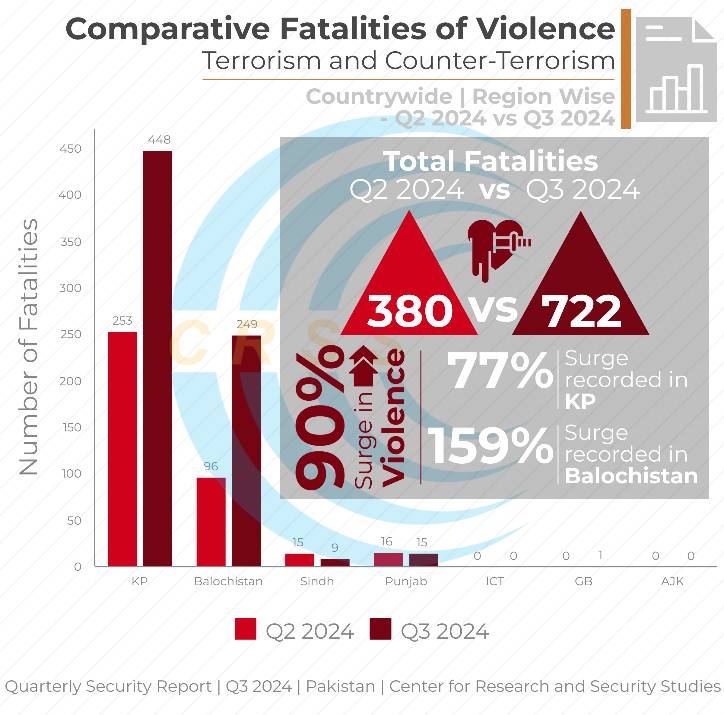
Pakistan entered a dark page of its history against terrorism in the year 2024. As per the Islamabad-based think tank Pak Institute for Peace Studies, or PIPS, its report on the Pakistan Security Report 2024 witnessed a severe increase in the trend of terrorism as it has become like those before 2014. Now, 95% of these attacks are in Khyber Pakhtunkhwa and Balochistan, making it dangerous to hold ground.
Some startling statistics featured in the report:
- TTP Attacks: Nearly 300 fatalities in 2024.
- BLA Incidents: A 119% increase, resulting in 225 deaths.
- Security Personnel: 358 martyred in the line of duty.
This resurgence in terrorism demands urgent attention to prevent the security situation from deteriorating further.
Regional Breakdown: Hotspots of Terrorism
Khyber Pakhtunkhwa (KPK):
Recorded 295 terrorist attacks, making it the most affected province.
The Hafiz Gul Bahadur group and TTP’s presence in Bannu and Waziristan have intensified insecurity.
Balochistan:
Experienced 171 attacks, primarily by the BLA and Balochistan Liberation Front (BLF).
This region remains the hub of Baloch insurgency because of issues over resources and governance.
Punjab and Sindh:
Punjab experienced 11 attacks, a sharp increase from 6 in 2023.
Sindh experienced a slight decrease at 12, with 10 of those attacks occurring in Karachi.
Root Causes of Terrorism in Pakistan
For this trend to be reversed, it is imperative to look at the root causes:
- Socio-Economic Inequality:
- The areas of Balochistan and KP are economically poor, have insufficient infrastructure, and offer limited jobs.
- The local’s dissatisfaction creates the fertile ground where insurgent organizations can flourish.
- Weak Governance and Corruption:
- Inefficient governance system coupled with the corrupt practices breed mistrust for the state institution.
- Justice being delayed and citizens being held responsible further isolate people.
- Cross Border:
- The regaining power by Taliban in Afghanistan has boosted other organizations like TTP that were working in these border areas quite freely.
- Border management is too weak, which further complicates the situation.
- Ethno-Sectarian Cleavages:
- The Baloch people feel neglected due to poor resource allocation and the dilution of their ethnic identity.
- Sectarian wars also intensify social fissures.
- Geo-Strategic International Shifts:
- External intervention and support from rival nations has severely impacted the security of the nation.
- Proxy war in the region increases Pakistan’s security threat level.
Solutions for Countering Terrorism
Countering terrorism would require a multidimensional approach:
- Economic Development:
- Invest in infrastructure, education, and health care in poverty-stricken regions like Balochistan and KP.
- Establish special economic zones that create employment avenues and reduce the level of poverty.
- Improved Governance:
- Strengthen local governance structures to address the issue of unequal resource utilization and redress grievances promptly.
- Judicial reforms that increase people’s confidence in the justice delivery system.
- Better Border Security
- Modern surveillance on the Afghan-Pakistan border by increasing manpower on the border
- Develop bilateral collaboration with Afghanistan in dismantling their terrorist sanctuaries
- Countering Narratives:
- Launch people-driven projects that prevent the growth of extremist thought.
- Promote an ‘inclusive narrative’ of unity and cultural diversity.
- Military and Intelligence Operations
- Carry out effective targeted operations on terrorist hideouts with minimum collateral damage.
- Intelligence mechanism should be enriched to prevent attacks.
- Political Dialogue
- Involve insurgent groups in fruitful dialogue so that their just grievances can be redressed.
- Peace talks should be transparent with measures for building confidence in the talks.
Long-Term Vision: United Pakistan.
Addressing terrorism through a holistic solution that transcends military action: Empower marginalized communities, help build interfaith harmony, and ensure justice to all in this effort to building a resilient Pakistan.
The security landscape can regain control only with these solutions coming from the top. Equally important is to have civil society, media, and international players actively engaged toward peace and stability.
Conclusion
The terror resurgence in Pakistan in 2024 is a strong reminder that a lot remains to be done. By tackling the root causes and providing practical solutions, Pakistan can again regain its path to peace and prosperity.
It is not just for national security; it is for the future of generations.
Read More News here: https://behindthecurtain.blog/israel-confesses-assassination-of-hamas-leader-ismail-haniyeh-in-tehran/